Category Archives: Tutorials

Socks for Stools?

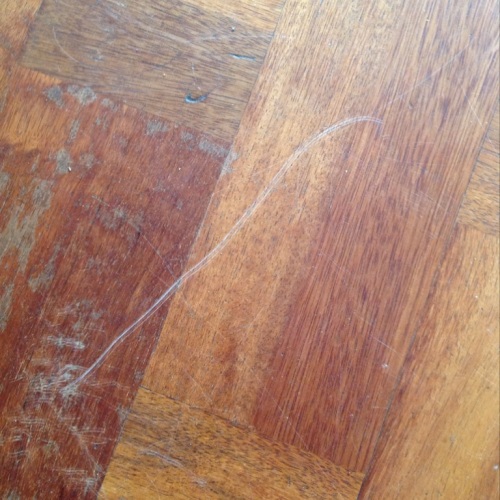
I hate our floor.  Hate the timber, hate the colour, hate that it always looks dull and dirty, but marks like these have meant my husband has been dragging his feet on replacing them.Marks on my floor.  Hate them.

That was until I saw this post from Stephanie over at All About Ami:

It was like the heavens opened and a light shone down, telling me exactly what I needed to do to be able to finally get new floors – make chair socks!

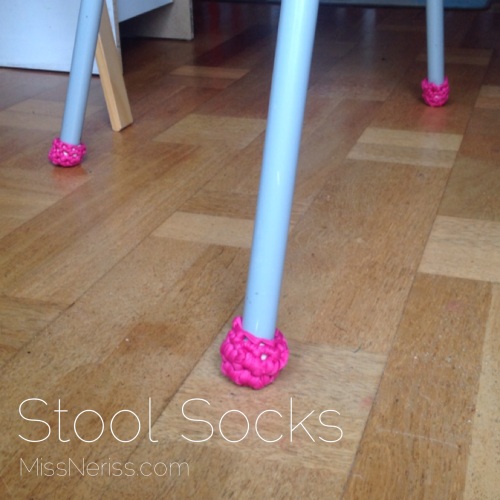
So first up is the high chair.  It’s been through many sticky felt bottoms, but they just don’t last, and don’t stick very well to the round feet of the high chair.  I used Zpagetti yarn scraps that I had in the cupboard and just smashed them out.Stool Socks, made with zpagetti yarn on missneriss.com

6 SC into a Magic Ring, then in row two I increased by two (inc, 2SC x2 = 8), then crocheted four more rows of 8SC.  The socks are a tight fit, but that’s what I need so they don’t slip off.

I’m also hoping that the heavy cotton yarn won’t wear out quickly, but when it does, they take less than five minutes and about a metre of yarn to replace.

Too easy, right?  Now to bring up the new floors discussion again…

How to: Crochet a Perfect Circle

Today I want to introduce you to one of the very best hacks I’ve found and show you how you can do it. This is something I’ve learned making amigurumis, and is especially useful when making really big stuffed animals. And not only for amigurumis, but for making mandalas or anything that needs to become a circle in a solid colour; like coasters, cushions, or floor rugs. Trust me, you’ll be thankful for this one.

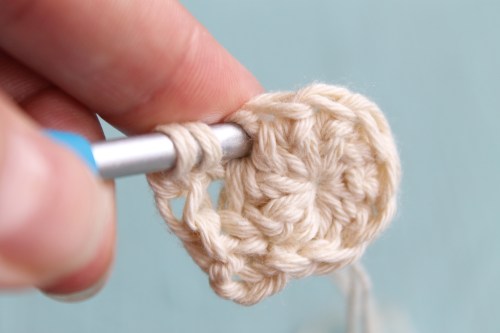
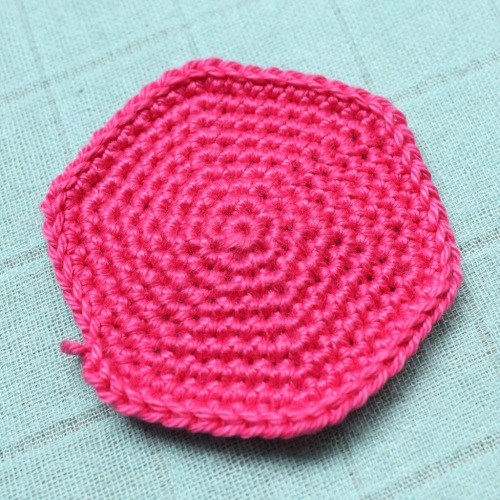
You know how you increase and increase and your circle really becomes more of a hexagon (or pentagon, octagon or whatever)? Well, it’s is thanks to the placement of the increase stitches. If you follow the Inc, SC method (or SC, Inc), as the piece grows, the increases become corners when what you really want is a circle. This is what I mean:

20140627-143931-52771436.jpg

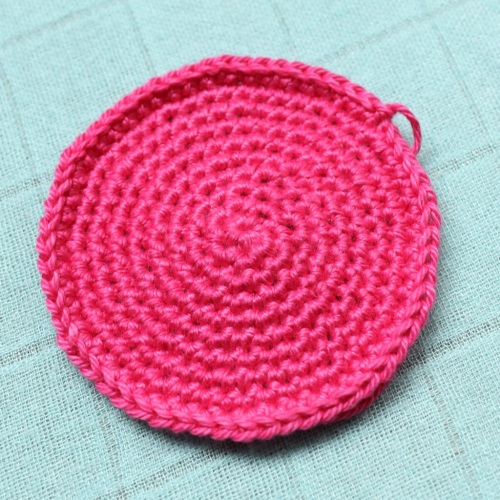
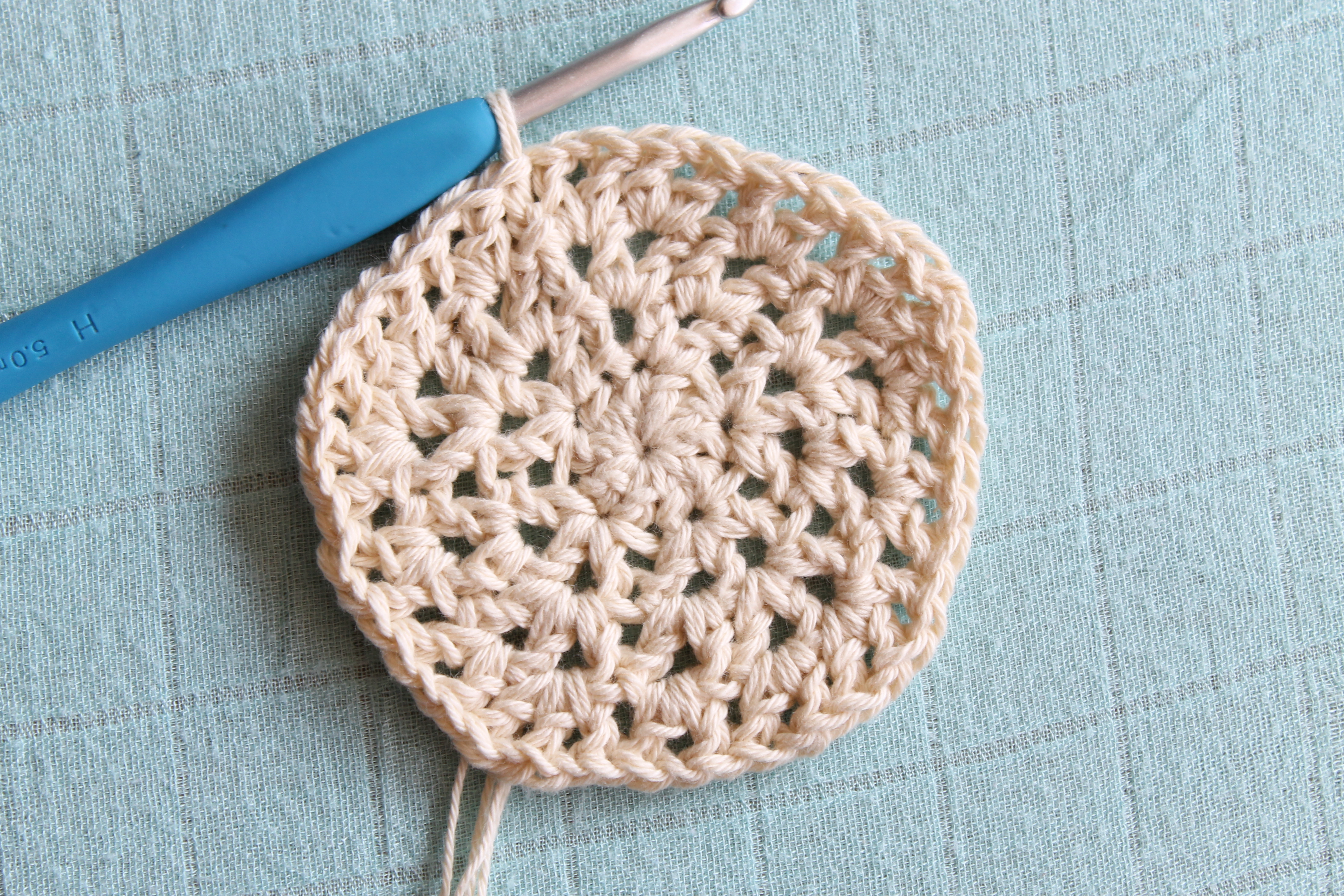
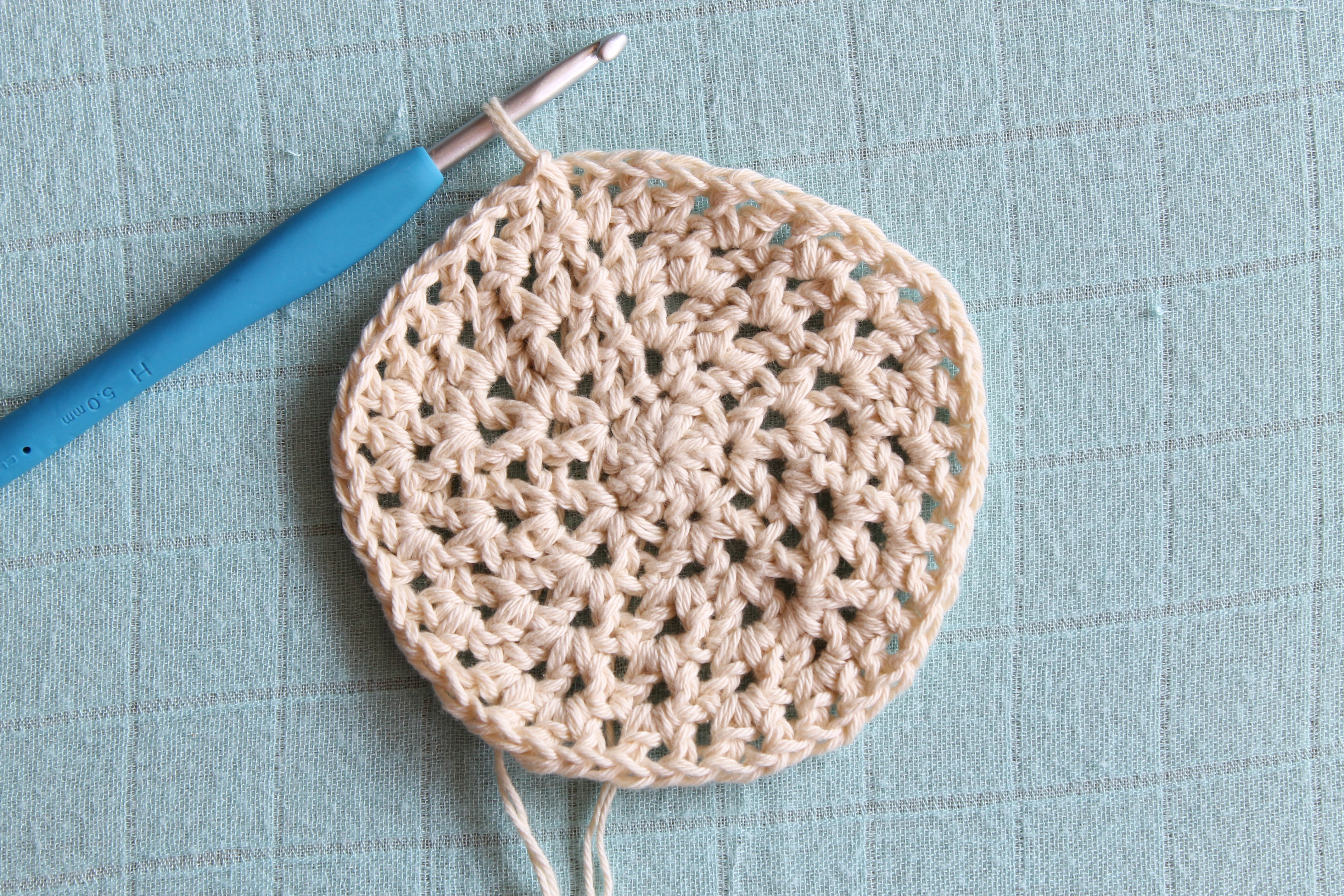
You don’t really want this, right? I’m not a fan of the spoke look myself, and I found that when making amigurumis I had to really stuff the critter tight to work the corners out. This makes the poor little amigurumi really hard and not so cuddly, and my daughter wants cuddly! So, the method I have for you will make your circle come out just like this:

20140627-144235-52955794.jpg

I think we can agree this looks much better, can’t we? Ready to learn how to do it? Basically, all you have to do is offset your increases. Really, it’s that simple. I’ll show you an example pattern that you can apply next time you’re crocheting a circle, or increasing in the round.

(US terms)

R1: 6SC stitches into a Magic Ring

R2: SC Increase around =12 stitches

R3: (Increase, 1SC) x 6 = 18 stitches

R4: 1SC, (increase, 2SC) x 5, Increase, SC = 24 stitches

R5: (Increase, 3SC) x 6 = 30 stitches

R6: 3SC, (increase, 4SC) x 5, increase, 1SC = 36 stitches

R7: (Increase, 5SC) x 6 = 42 stitches

R8: 4SC, (increase, 6SC) x 5, increase, 2SC = 48 stitches

R9: (Increase, 7SC) x 6 = 54 stitches

R10: 5SC, (increase, 8SC) x 5, increase, 3SC = 60 stitches

As the circle grows in this way, corners may begin to appear again, so you should add an extra offset to the rounds.

R11: (increase, 9SC) x 6 = 66 stitches

R12: 3SC, (increase, 10SC) x 5, increase, 7SC = 72 stitches

R13: (increase, 11SC) x 6, = 78 stitches

R14: 6SC, (increase, 12SC) x 5, increase, 6SC = 84 stitches

R15: (increase, 13SC) x 6 = 90 stitches

R16: 4SC, (increase, 14SC) x 5, increase, 10SC = 96 stitches

R17: (increase, 15SC) x 6 = 102 stitches.

Continue in this way until the circle is as large as you need it to be.

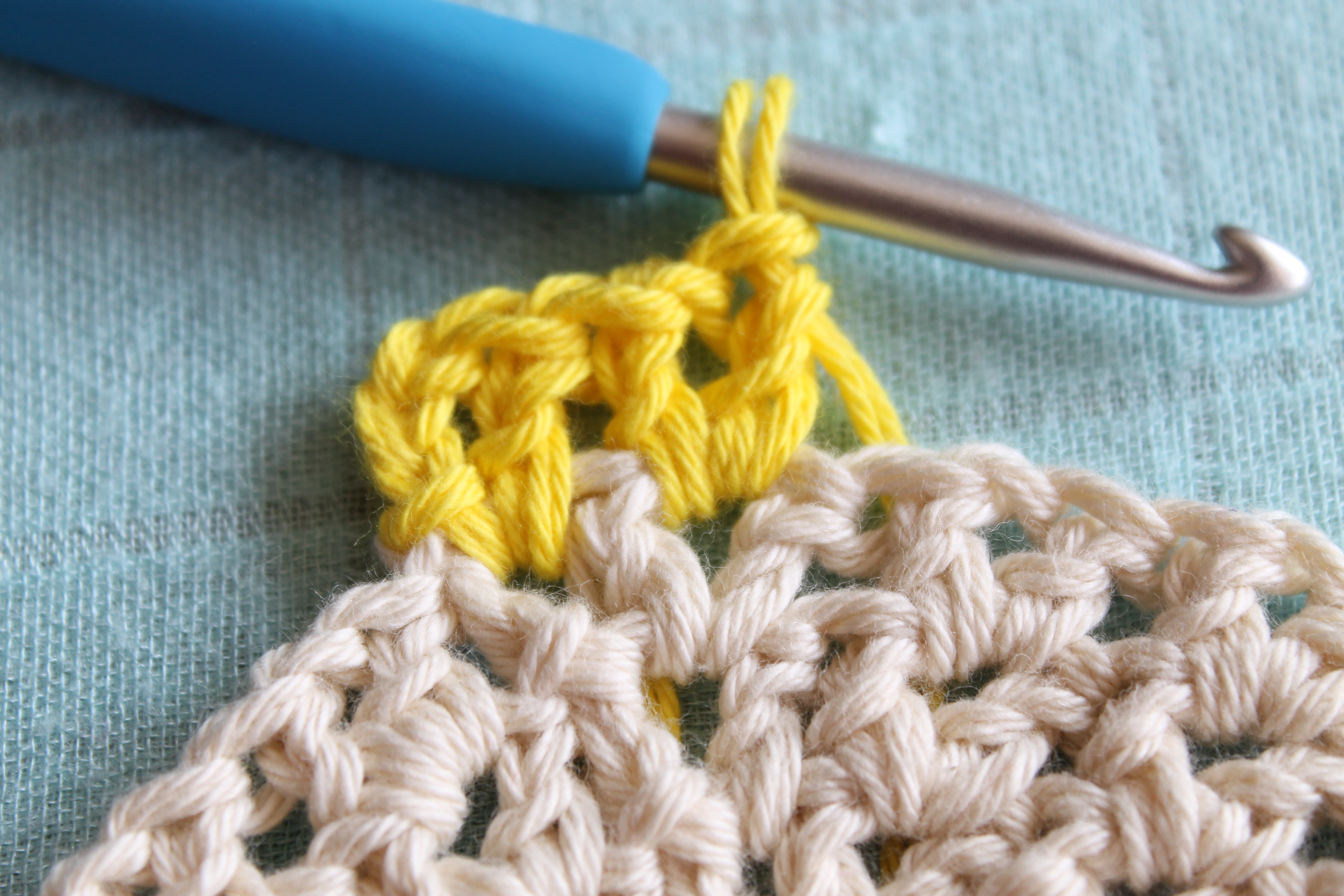
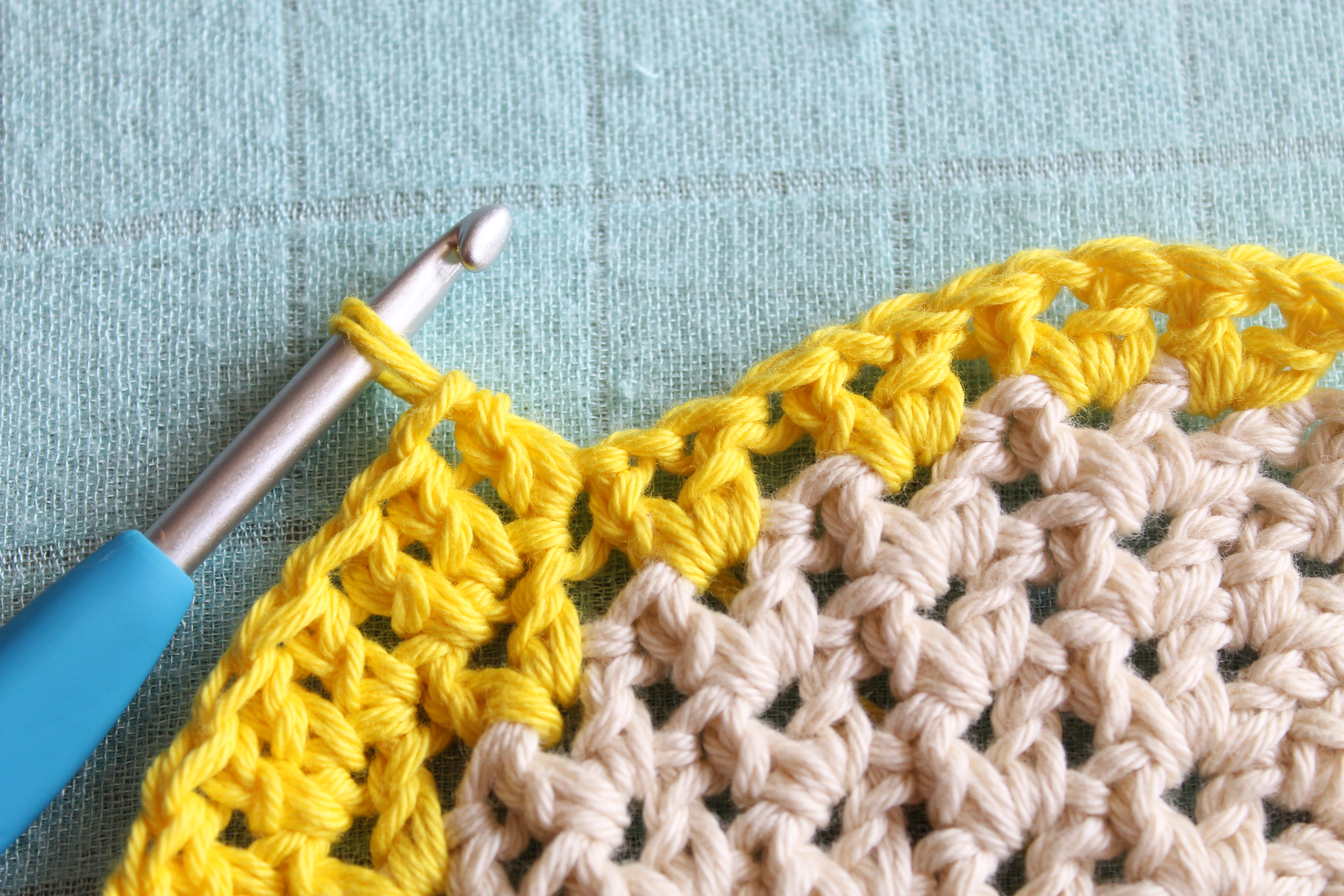
When it comes to decrease rows, do the same thing, but in reverse. Look at the difference: 20140627-145541-53741247.jpg What do you think? Going to give it a try on your next project?

For this tutorial I used Scheepjes Catona.  It’s one of my favourite amigurumi yarns, I’ve used it in a couple of designs, like my free flopsy bunny pattern.

Shop it here: Wool Warehouse* or Caro’s Atelier*

Enjoy!

*affiliate link

Two Little Dickie Birds – finger puppets

Two little dickie birds sitting on a wall, one named Peter, one named Paul. Fly away Peter, fly away Paul. Come back Peter, come back Paul. – nursery rhyme

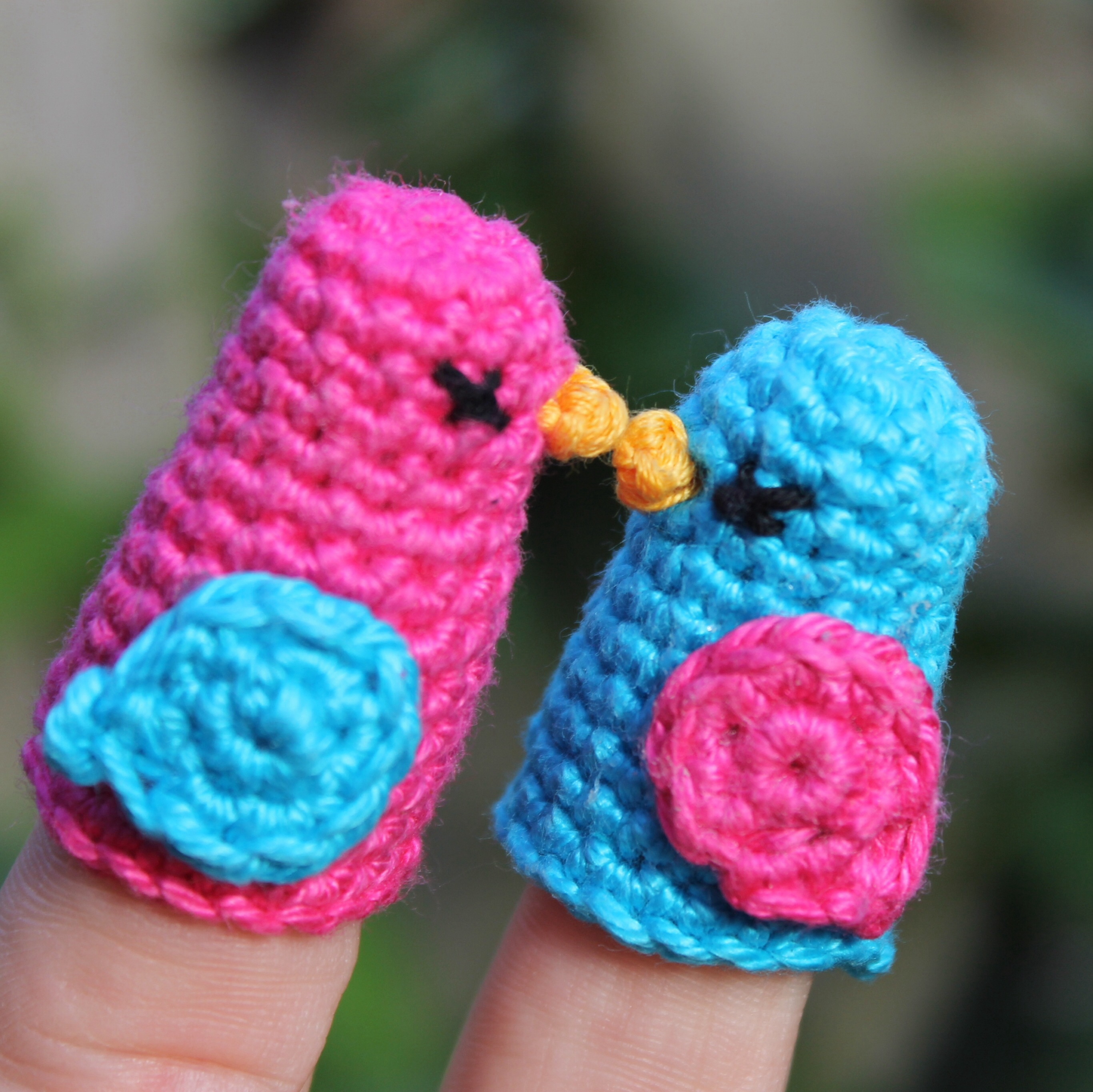
Dickie Bird finger crochet pattern, toddler and adult fingers on missneriss.com

This is a rhyme that my daughter and I say together every night. I’m not sure where it came from, but all of a sudden she’s mad about all the old nursery rhymes I heard as a child. It’s amazing what comes back to you when you’re operating on almost zero sleep…

Dickie Bird finger crochet pattern, toddler and adult fingers on missneriss.com
I thought it was a bit boring only playing with our fingers, so I thought it would be cool to crochet a couple of Dickie birds and surprise her at bed time last night.

Dickie Bird finger crochet pattern, toddler and adult fingers on missneriss.com

Huge hit! She loved them. So much so that I had to make some toddler size ones too!

Of course I had to write down the pattern and share it with you, so here you go.

Two Little Dickie Birds

What you’ll need:
4ply cotton yarn in two colours plus black and yellow*. I used a combination of Phildar coton 3 and Linie 163 because that was what was in my stash.
A 3mm hook
Scissors
Fabric glue
Tapestry needle

Adult size

1: 6SC Into a magic ring
2: INC x 6 = 12 stitches
3-6: 12SC = 12 stitches
7: (INC, 3SC) x 3 = 15
8: 15SC = 15 stitches
9: (INC, 4SC) x 3 = 18 stitches
10-13: 18SC = 18 stitches

Making the face:

Before increasing at row 7, make the face. Cross-stitch the eyes using black yarn into row 4, with 3 stitches in between.
Attach the yellow yarn to row 5, between the eyes. Chain 3, slip stitch into the same stitch, tie off.

Wings (make two):

1: 6SC into a magic ring
2: (INC x 3), HDC, HDC and picot into the same HDC, HDC, SC, slip stitch and tie off. Hide all the ends and glue the wings to the sides of the body.

Toddler size

1: 6SC Into a magic ring
2: INC x 6 = 12 stitches
3-6: 12SC = 12 stitches
7: (INC, 3SC) x 3 = 15
8-10: 15SC = 15 stitches

Repeat face and wing instructions from the adult size.

20140622-210249-75769180.jpg

*Affiliate link

Crochet Hack: Straight Edge Double Crochet

You know how much I love a good crochet hack.  I love a good foundation single crochet, and I LOVE Moogly’s Chainless Starting Double Crochet so much that I use it exclusively.  Well, I did.  Now I have a new love.  It’s Mamachee’s Double Crochet Hack! Seriously, this hack has revolutionised my crochet style!  Let me show you some examples.

I’ve been working on this Convergence top for about a month now, and for the first half of the back side, I used Moogly’s version, but on the top half I started using Mamachee’s.  Can you spot the difference?Straight edge double crochet

Both are excellent methods, but you can see the edging to the right is almost perfectly straight. And firm.  It’s going to be excellent when the time comes (in another month or so?) to sew the sides together.

You can really see the difference on the feature rows of the top.  Here’s the Moogly version:Convergence Edging - Moogly version


And here’s the Mamachee version:Convergence edging - Mamachee version

Great, isn’t it!

Want the hack? Get it here:

How to double crochet a better square

Image from mamachee.com

Scheepjes Bucketful of Sunshine Hat – Tutorial (Toddler)

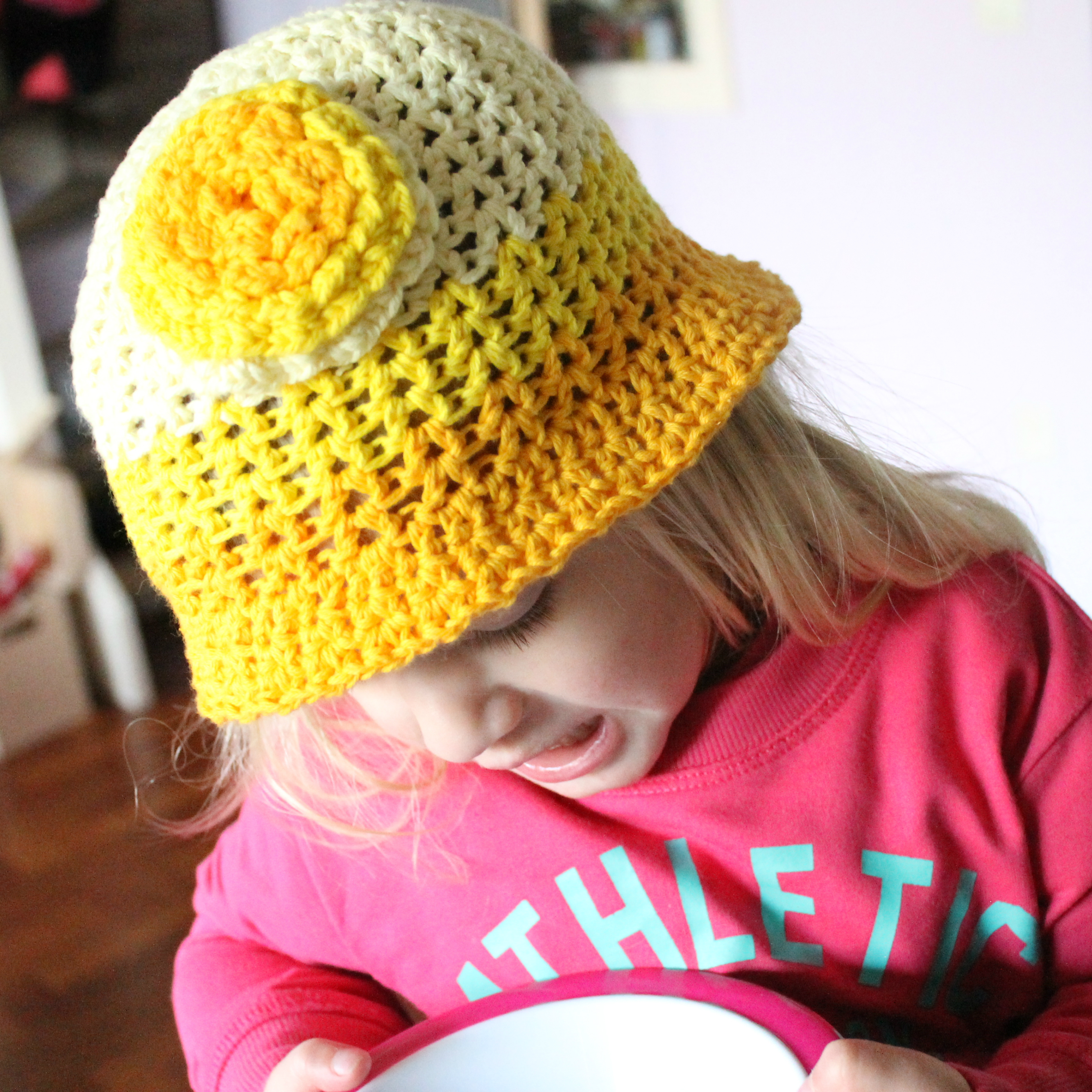
Here it is, the tutorial for my Bucketful of Sunshine Hat!  My daughter absolutely loves it, and so do I.  And it’s ready, just in time for the glorious weather in the Netherlands.

Enjoying the weather and the Bucketful of Sunshine hat on missneriss.com #scheepjes #scheepjeswol #cotton8 #crochet

Let’s get started, shall we?  This tutorial will show you how to make a hat to fit a toddler/preschooler.  My daughter has a small head for her age (it’s a family thing, so does my husband), so if your toddler’s a bit bigger, go up half a hook size, it won’t matter.

This hat is made using the V-Stitch and the Half V-Stitch.  The half V-stitch may well be a made up term, but it’s essentially the same stitch as a normal V-Stitch, but using the half double crochet instead of a double crochet.  You can V-Stitch using whatever height stitch you like really, but Google wouldn’t tell me the official name, so I’ve assigned one to it.

The V-Stitch

The V-Stitch is a very easy stitch to master, it is essentially a double crochet, chain 1 and double crochet in the same stitch.  Then you skip a stitch and repeat in the next.  When it comes to the next row, instead of doing the V-Stitch into the double crochet stitch, you do it into the chain 1 space.

A bit like this:
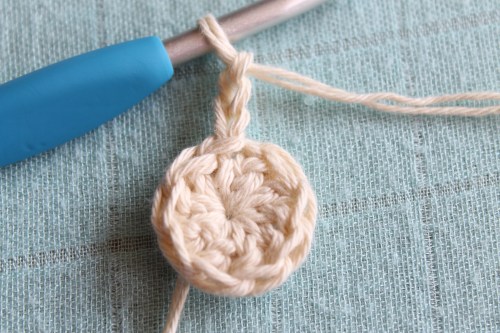
V-Stitch step 1, chain 3

V-Stitch step 1, chain 3

V-Stitch Step 2 - DC into same stitch

V-Stitch Step 2 – DC into same stitch

V-Stitch step 3 - skip 1 stitch, DC into the next stitch

V-Stitch step 3 – skip 1 stitch, DC into the next stitch

V-Stitch Step4 - Chain 1

V-Stitch Step4 – Chain 1

V-Stitch step 5 - DC into the same stitch

V-Stitch step 5 – DC into the same stitch
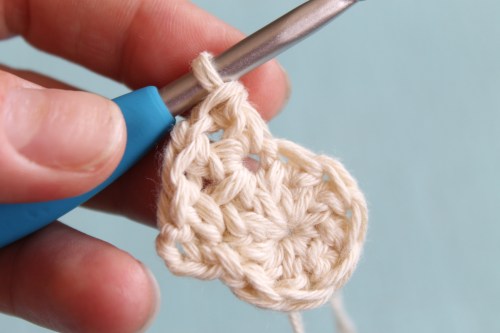
And there you have it!  The V-Stitch

And there you have it! The V-Stitch

The Half V-Stitch is the same process, using a half double crochet instead.

What you’ll need

Scheepjeswol Cotton 8 in three shades of the same colour.  I used yellow (508, 551, and 655). The best thing you can do is cake the yarn so you can pull from both ends, because for this project we’re using two strands together.

You’ll also need a 5mm crochet hook. scissors and a tapestry needle.

Abbreviations

(American terms)

MR – Magic Ring

DC – Double Crochet

VS – V-Stitch

HVS – Half V-Stitch

Inc – Increase

STS – Stitches (stitch count)

Notes

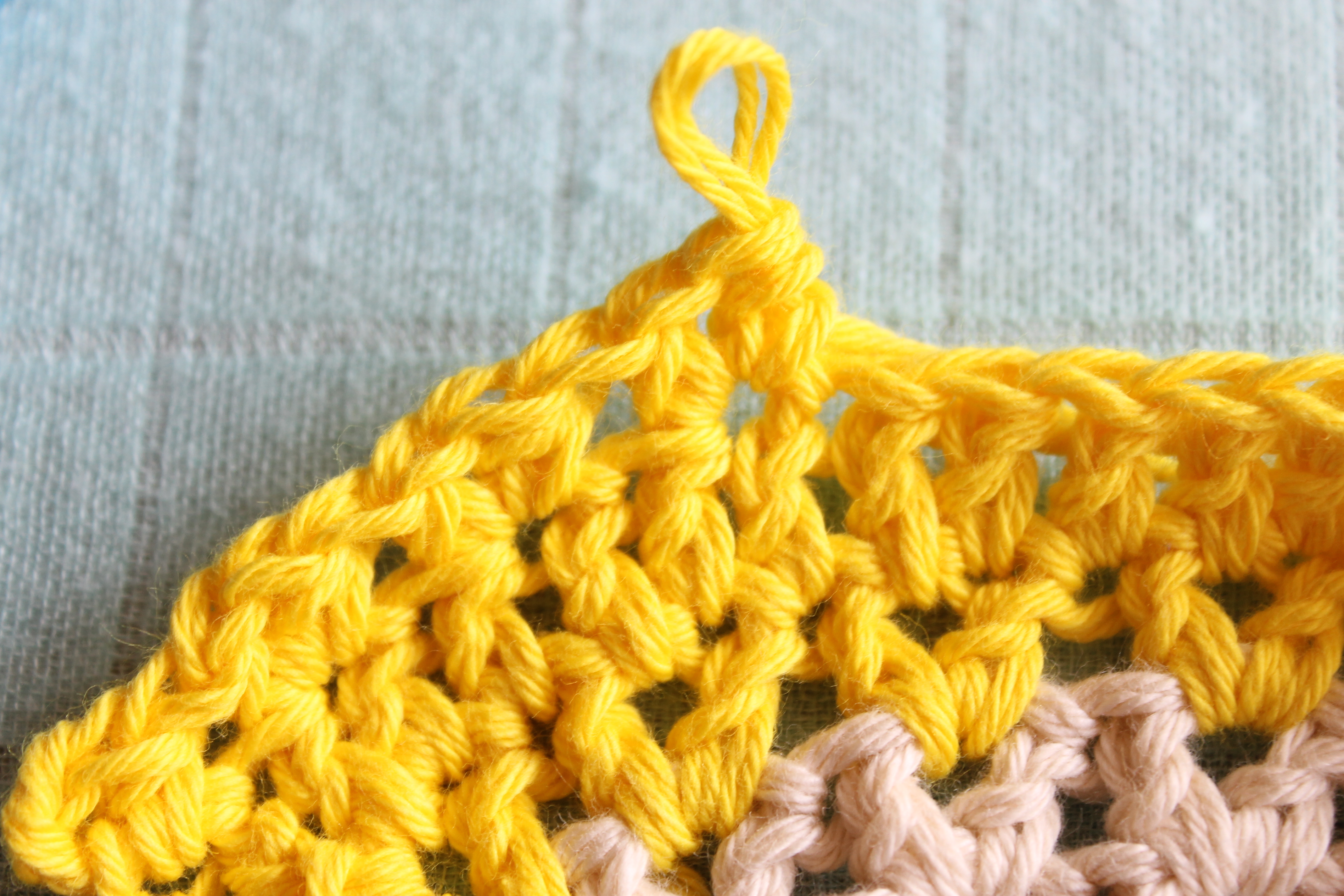
The beginning of each row begins with a CH3, which counts as the first DC and CH 1 to start your first V-Stitch of the row.  Below I will just use VS, but assume unless described otherwise that the first V-Stitch is a CH3, DC.  Always join into the chain space of the first V-Stitch.

When working the Half V-Stitch, still chain 3 at the beginning of the each row.

Oh, and did I mention that I’m a leftie?

Round 1

Start with a Magic Ring, chain 3 and work 9 DC into the ring, pulling it tight.  You’ll have 10 double crochets for your foundation.
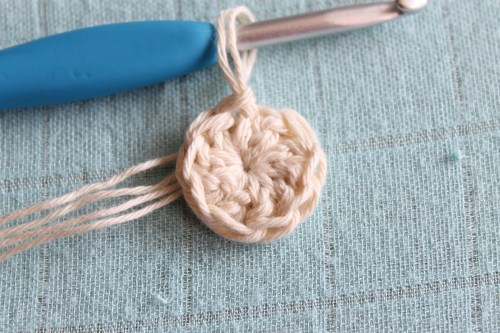
10 DC into a magic ring

Round 2

VS Inc x5.  SLS into the first VS to join = 15 STS

To crochet a V-Stitch Increase, follow the instructions for a normal V-Stitch, but instead add a third V.  So, DC, CH1, DC into the same stitch, CH1, DC into the same stitch again.  Skip 1 stitch and either repeat the increase (as is needed in Round 2) or work an ordinary V-Stitch.

V-Stitch Increase - CH3, DC, CH1 DC, skip 1 stitch, V-Stitch in the next

V-Stitch Increase round

Round 3

(VS Inc, VS) x 5.  SLS into the first VS to join = 25 STS

INC, VS x 5 round

 Round 4

(VS Inc, 2 x VS) x 5.  SLS into the first VS to join = 35 STS

INC, 2VS x 5 Round

Round 5

VS x 20.  SLS into the first VS to join = 40 STS

VS x 20 Round

Round 6

(VS Inc, 3 x VS) x 5.  SLS into the first VS to join = 45 STS

Round 7

VS x 25.  SLS into the first VS to join = 50 STS

Round 8-12

VS x 25.  SLS into the first VS to join = 50 STS

Change colour
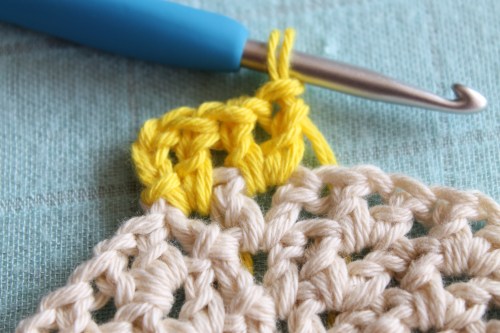
Change Colour

Round 13-15

VS x 25.  SLS into the first VS to join = 50 STS

Change Colour
Round 16

VS x 25.  SLS into the first VS to join = 50

Round 17

In this row we start making the brim.  We will count the CH 1 space in the V-Stitch as a stitch.  We will also be adding a few increases to widen the brim.

CH2, (2DC in the next stitch, which is the 1st CH space, then DC in the next 14 Stitches.  Repeat this 4 times and slip stitch to the first CH2 of the round. = 80 STS
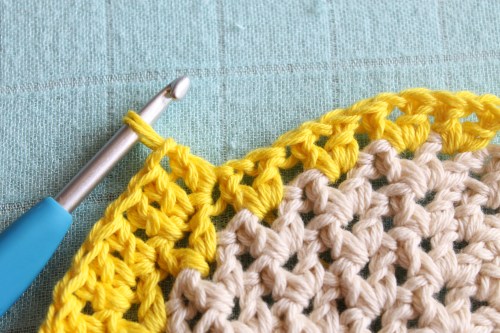
DC in each stitch around, adding increases every 14 stitches

Round 18

HVS x 40 = 80 STS

Half VS around

Round 19

HVS x 40 = 80 STS

Finish off and weave in the ends.

Sunburst

To make the sunburst, I experimented with lots of different flowers and picots and nothing really seemed to be right.  So, when I came across this scrubby pattern on Petals to Picots, I realised it would be perfect.  I just grew the sunburst with each colour instead of crocheting the entire base in one go.  Then I just tacked it onto the hat in the right spot.  You can pick up the pattern for free here.

Sunburst attached to Bucketful of Sunshine hat


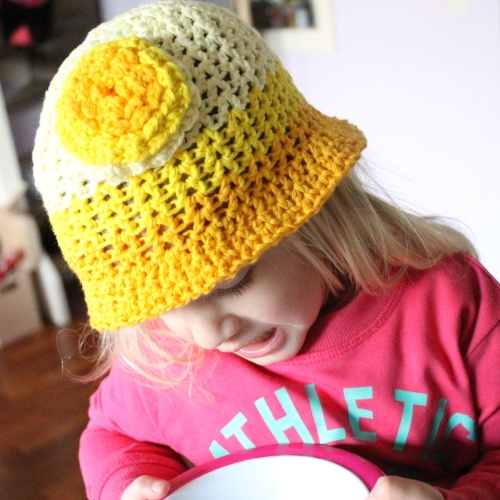
Here’s the finished hat, modelled on my super-cute (just recovering from chicken pox) daughter:
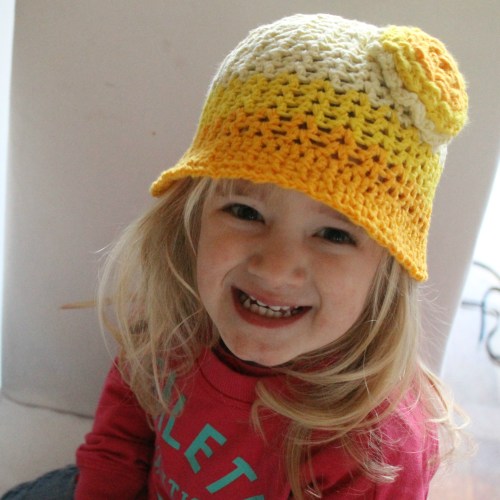
Bucketful of Sunshine hat on missneriss.com - free pattern #scheepjes #scheepjeswol #cotton8 #crochet #freepattern Bucketful of Sunshine hat on missneriss.com, made with Scheepjeswol Cotton 8. #scheepjeswol #cotton8 #scheepjes

You’ve made it to the end, way to go!  I hope you enjoy making this adorable hat as much as I’ve enjoyed designing it.

Watch this space, coming soon are other sizes, including the 3-6 month old which is up next!

For updates and cute photos in the mean time, do follow me on both Facebook and Instagram, and I would be so excited if you would share your own projects with me!

https://www.facebook.com/madebyMissNerisshttp://instagram.com/miss__neriss


Wink’s Summer Hearts Mandala

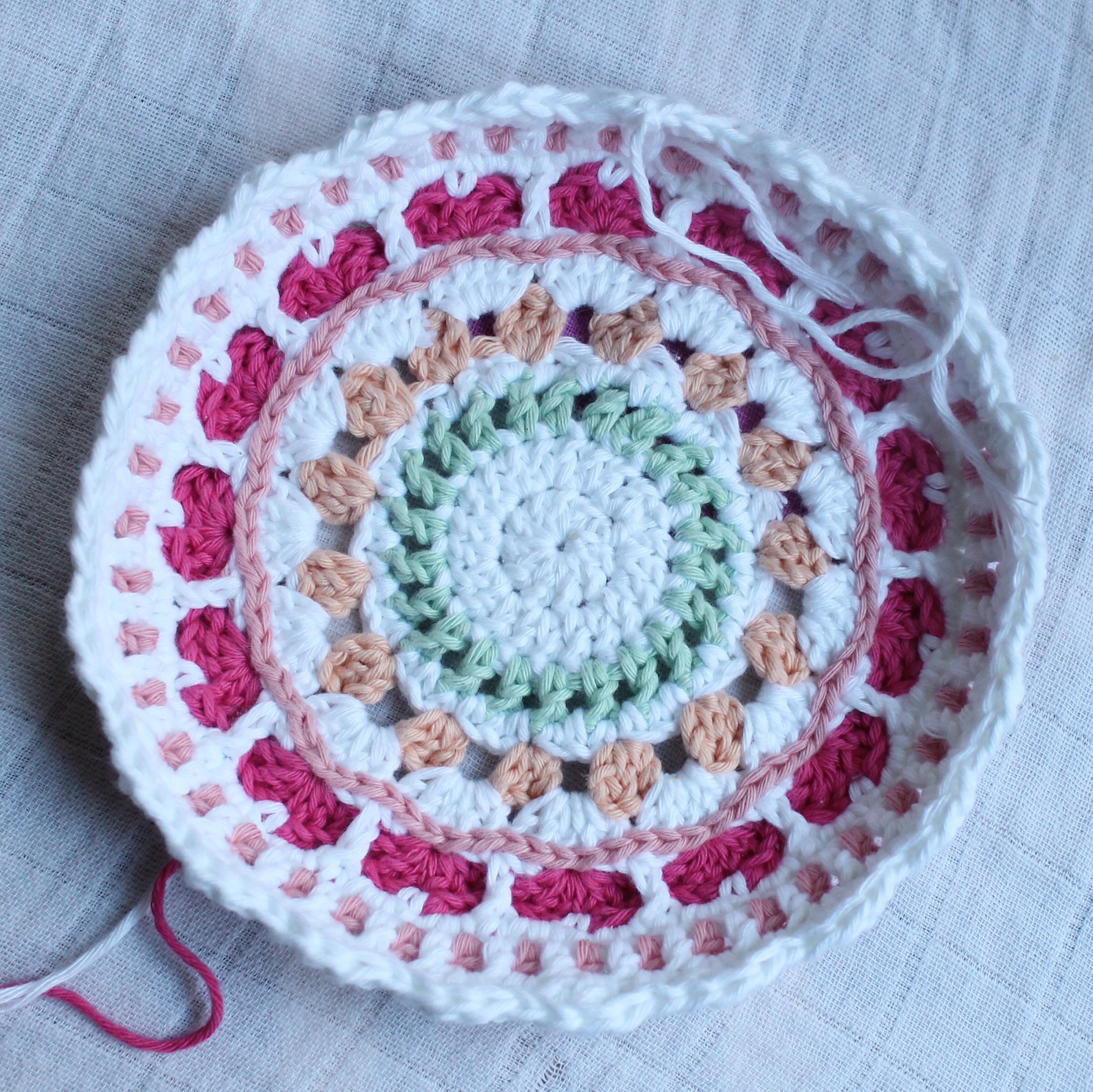
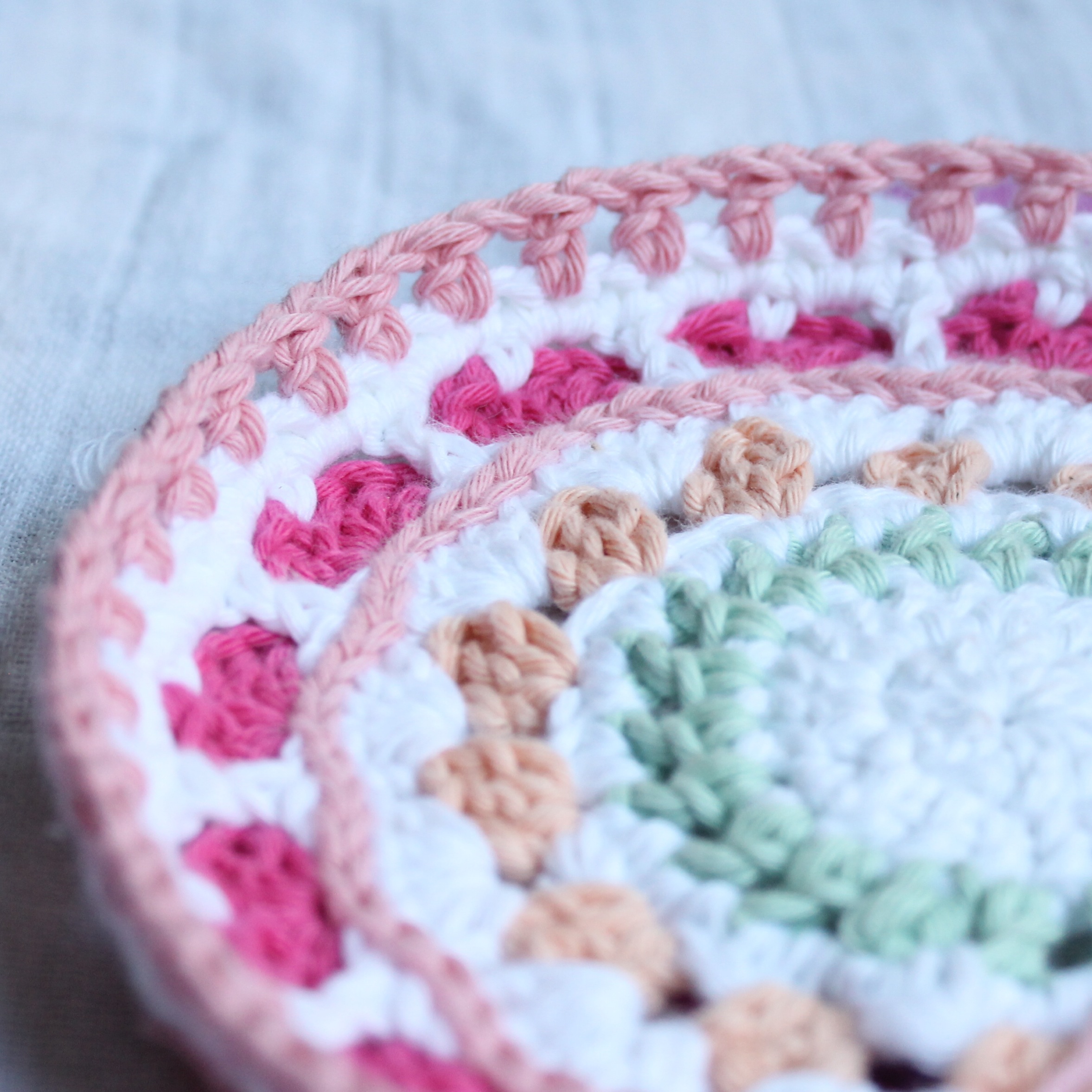
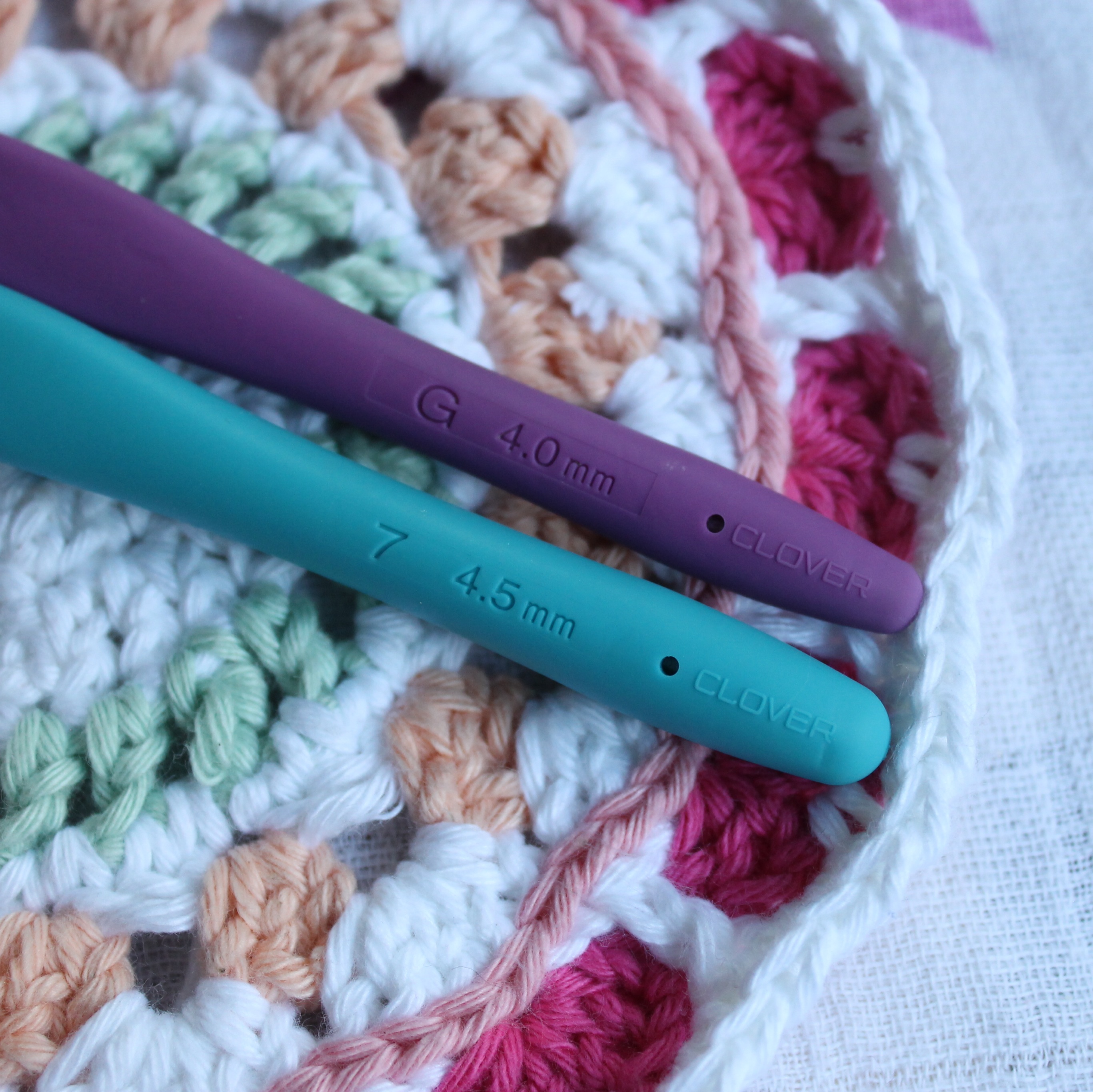
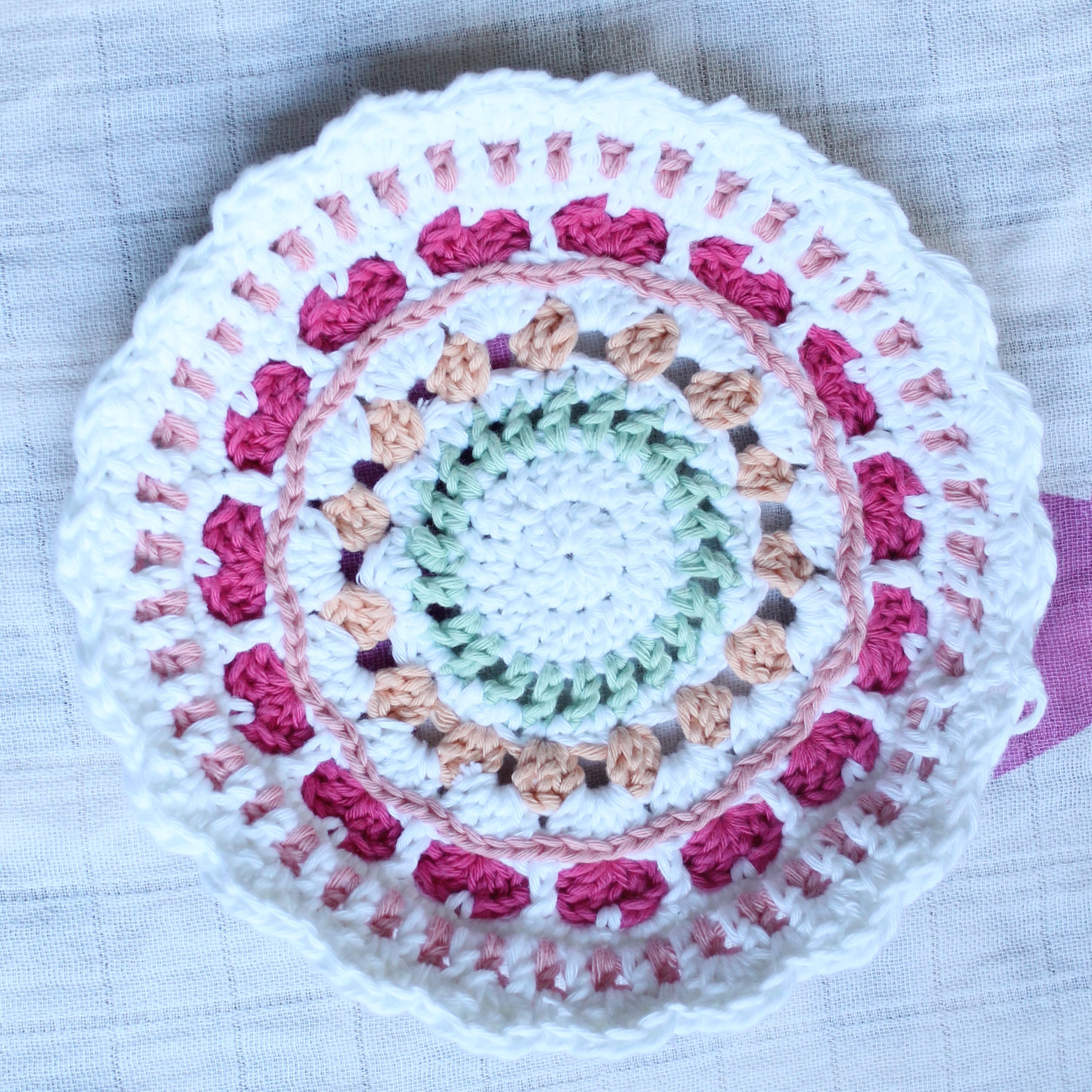
If you only follow one new blog this year, you must make sure it is A Creative Being.  Everything about Wink’s blog is beautiful.  The projects, the colours, the photography, everything.  It’s just one amazing package of crochet goodness. I have a few of her patterns, including the Design Wars shortlisted entry Dancing Hearts Wrap and most recently, the Summer Hearts Mandala which is gorgeous, gorgeous, gorgeous! I wanted to create the mandala in line with the Crochet Collective’s Mandala Crochet Along, but I’m just useless at sticking with timelines, my life is just too busy, plus I really wanted to make this mandala as my first, and it wasn’t on their schedule (but there are some extraordinary ones, so check it out). So, I decided to sit down one night and smash it out.  And smash it out I did.  It’s a seriously fast pattern to work up, and it looks amazing.  I had the yarn and colours that Wink used (or close enough to) on hand and I couldn’t imagine using anything else. The finished mandala with the tension being too tight But I had a problem.  It’s difficult to see above, but instead of lying flat, the mandala has curled edges.  See what I mean? Mandala, tension too tight on missneriss.comSo I decided to leave it for the night as it was late and I was tired, and I wanted to fix it in the morning when I was feeling fresh again. The problem I have is that although I was using the exact same yarn, and the exact same hook as the pattern, my tension is far tighter than Winks, so the edges curled up on me.  This is a result of all the amigurumi projects I’ve been focusing on – you have to crochet tight so as to keep the stitches close together (I usually use at least one hook size down than what the yarn calls for). Here’s how I hold my yarn, how do you hold yours?  See how tightly wrapped around my little finger it is? Here's how I hold my yarn, super tight tension after so many amigurumi projects.But instead of frogging the entire project, I decided to just rip out the last couple of rows, to where it started to curl. The offending rowThis is the row that was causing the problem, before that I was progressing beautifully. I decided that because it’s difficult for me to loosen my tension (old habits die hard, right?), I would go up half a hook size and try my best. Changing from a 4mm to a 4.5mm hook to complete the projectI love my Clover hooks, they are the single best crochet related purchase I’ve made so far. And here we go!  The finished mandala! Summer Hearts Mandala by A Creative Being on missneriss.comSee how beautifully flat it lies now? It has a slight curve, a bit like a saucer, but I think that’s the intention, and I love it. See how it lies flat?  Perfect Summer Hearts Mandala on missneriss.comThe Summer Hearts Mandala was a beautiful project to make, I’m definitely going to be making more, and will experiment with different colours. Would you like me to make you one? By all means feel free to get in contact, I’d be honoured. Have you made any mandalas?  Which pattern is your favourite? There are so many to choose from and they’re all beautiful.

Candace Scarf Pattern

Remember a couple of weeks ago when I shared the Candace Scarf that I made for my mum?  Well, in that post I promised a pattern, but of course I completely forgot to follow up until I was reminded at the weekend.  Thanks for that Anke!

You can find the pattern in the description of this pin:

I also promised to tell you how I hacked the pattern as it just didn’t seem to be correct, and I also made it more fluid, so you don’t have to cut and join, which I hate doing!

Below is how the beginning rows of the scarf look:

The beginning rows of the Candace ScarfWhen it comes to joining, the pattern asks you to complete the trim, fasten off, and join at the other side.  I decided to leave the trim out entirely, but you can keep it in if you like.  I just found it unnecessary for my tastes. (I think initially I had run out of yarn, so that was the decider for me.)

So, in the pattern, row four instructs you to make the bows, but instead I completely skipped that row and went on to the next set, because I planned to make the bows using my joining row at the end.  Here’s the last row, waiting to be joined:

The last rows before joiningInstead of sewing the ends together as the pattern instructed me, holding both ends of the scarf together and working through four loops at once (both stitches), I single crocheted in the first three stitches (of both ends), chained 5, single crocheted around the three chains, from the beginning end of the scarf to make a bow, then chained 5 again, single crocheting in the next three stitches (all loops, joining both ends of the scarf).  I repeated this to the end, fastened off and was done.

Candace Scarf on missneriss.com #malabrigo

For me, it just made for a tidier join and also means less ends to weave in!  We all hate weaving in ends, right?

If you want to retain the trim, you can use this method still, by doing the trim down one side, joining across, then going down the other side. Still no need to fasten off and join to continue, so you should be able to make the scarf in one long piece (except when you run out of yarn and have to rejoin).

I made my latest Candace Scarf using Malabrigo Silky Merino, which I picked up from houseofyarn.nl here in the Netherlands.  It is such a gorgeous yarn, I promptly bought half a dozen more skeins.  I have an order to make a black version, and am now on a mission to find the “perfect black”.

Any tips for a simply gorgeous yarn that is hand dyed to show variation and is merino based? (I’m dedicated to merino, having grown up on a merino sheep farm.)

Spring Scarf – Pattern

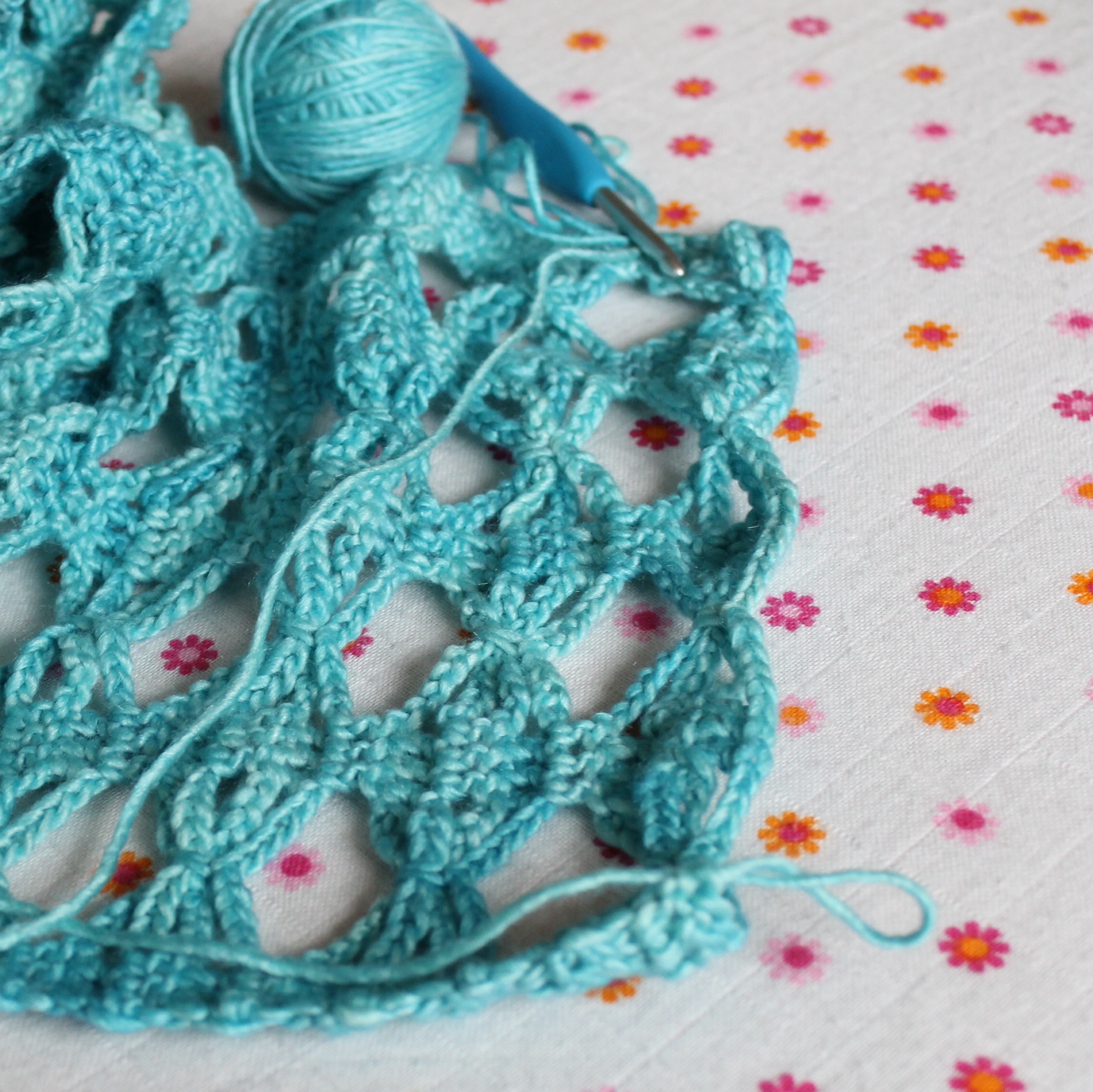
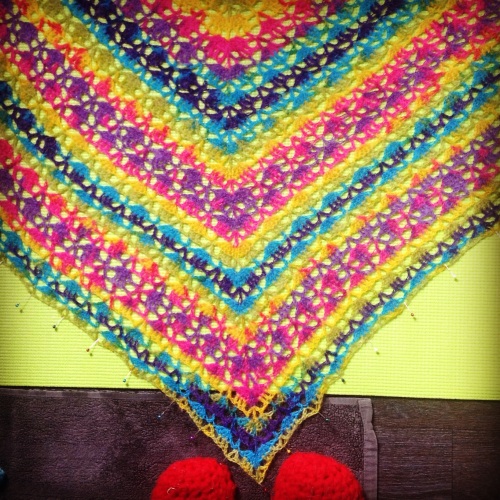
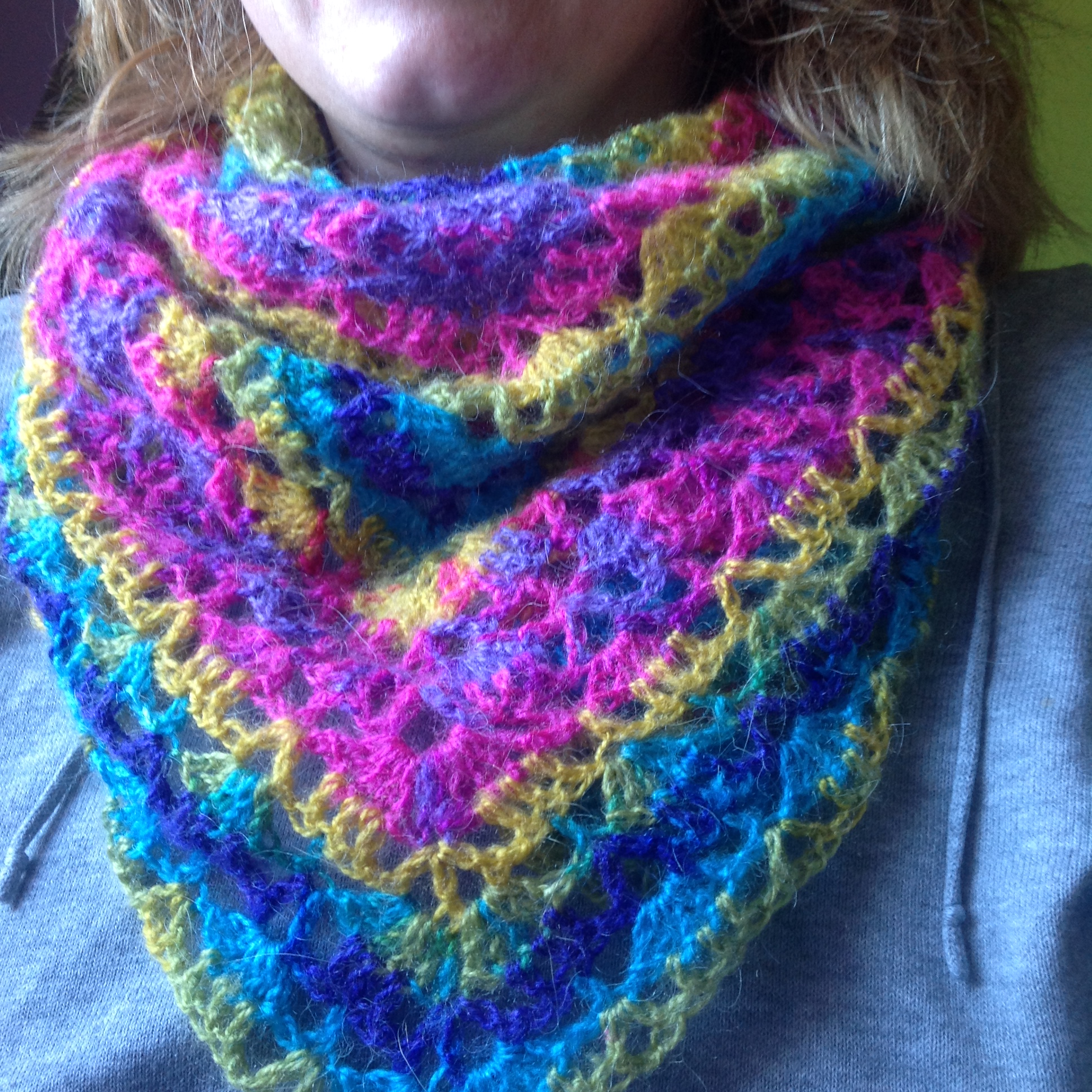
I’ve been working on this scarf for months. I found the yarn in my local store ‘t Spoeltje, here in Almere Haven (it’s Parrot, by Hjertegarn) and I love it because I’m such a magpie in that I LOVE bright colours and love variegated yarns. But it sat there for ages, not becoming anything. I do that. I buy yarn because it’s pretty, but have no project in mind. Eventually I decided to try making a triangle shawl. I stumbled across a pattern somewhere on the internet, but couldn’t follow it properly, so kind of just tried my best and made it up a bit as I went along. Then the pattern disappeared, and I have no idea where to find it again. Luckily it was very simple to figure out from what I’d already done.

It went on for a while. I’d work on a few rows, then put it back in the cupboard. For about six months. But this week I decided to finish it off. I was coming to the end of the ball of yarn, so decided to create a trim for it. Man. What a task. Because I had no pattern, I had no idea how it should be finished off. I had no stitch count, and I honestly couldn’t be bothered trying to figure out some fancy trim. And googling “crochet trim” is a disaster. There are way too many options, my head just exploded.

So in the end, I decided to just leave it. I quite liked the plain effect as the shawl is so colourful anyway I didn’t think it would be missed.
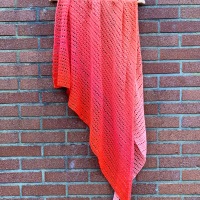
Spring Scarf - free pattern on missneriss.com

But then, I decided I didn’t like it that much. My husband didn’t like it either. So what was I going to do with it? Well, first I had to block it. I had never blocked anything before, because I tend to make amigurumis and normal scarves, nothing that needs the extra effort to block. But, I had some Eucalan Wrapture wool wash as a sample from a previous yarn order, so I washed it and pinned it out to dry.

Then I had to wait. And wait. For a day! I decided when I looked down at the blocked piece that I really liked it after all. The colours worked out beautifully, and it is perfect for Spring. Plus the yarn was going to be deliciously soft with the Angora blend.
Spring Scarf blocking - free pattern available on missneriss.com

This morning it was dry, so I unpinned it and promptly started wearing it. I may never take it off, actually.
Spring Scarf - free pattern on missneriss.com

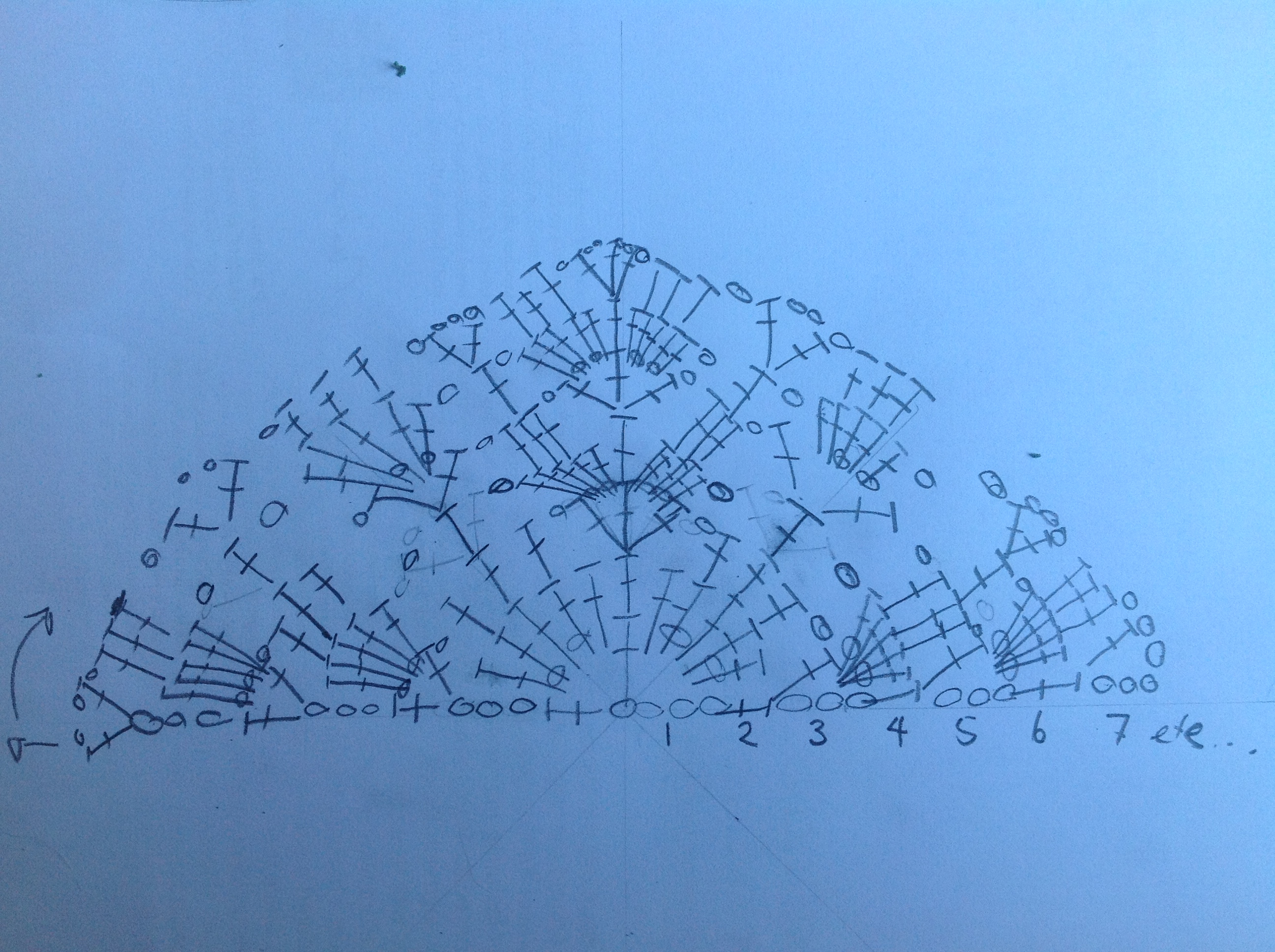
Now I’m being asked for the pattern. It’s far too complicated to write out, so I’ve smashed out a chart.
Spring Scarf chart pattern on missneriss.com

Just keep crocheting until you either 1. get to the size you want, or 2. run out of yarn like I did!

For other projects I’ve also used Malabrigo yarn, which can be picked up at Wool Warehouse* (with global shipping).

Enjoy.

Want to see more? Come join me on Facebook and on Instagram, where I spend the vast majority of my time…
http://instagram.com/miss__nerisshttps://www.facebook.com/madebyMissNeriss

*Affiliate Link

Moogly’s Chainless Starting Double Crochet

While making my beautiful Candace Scarf in the last couple of weeks, I decided to incorporate this new technique that I learned from being a regular visitor to the Moogly Blog.

In pretty much every single pattern you read, when crocheting to the end of the row the instruction will be “Chain 2, turn,” which is a great, fast and simple way to keep going when making items that are worked in rows.  However, the down side is that there are always holes where the chain 2 is.  Now, this probably isn’t noticeable at all to the wearer, unless they crochet.  But to me it’s basically like a pair of dog’s bollocks.  Fairly obvious.

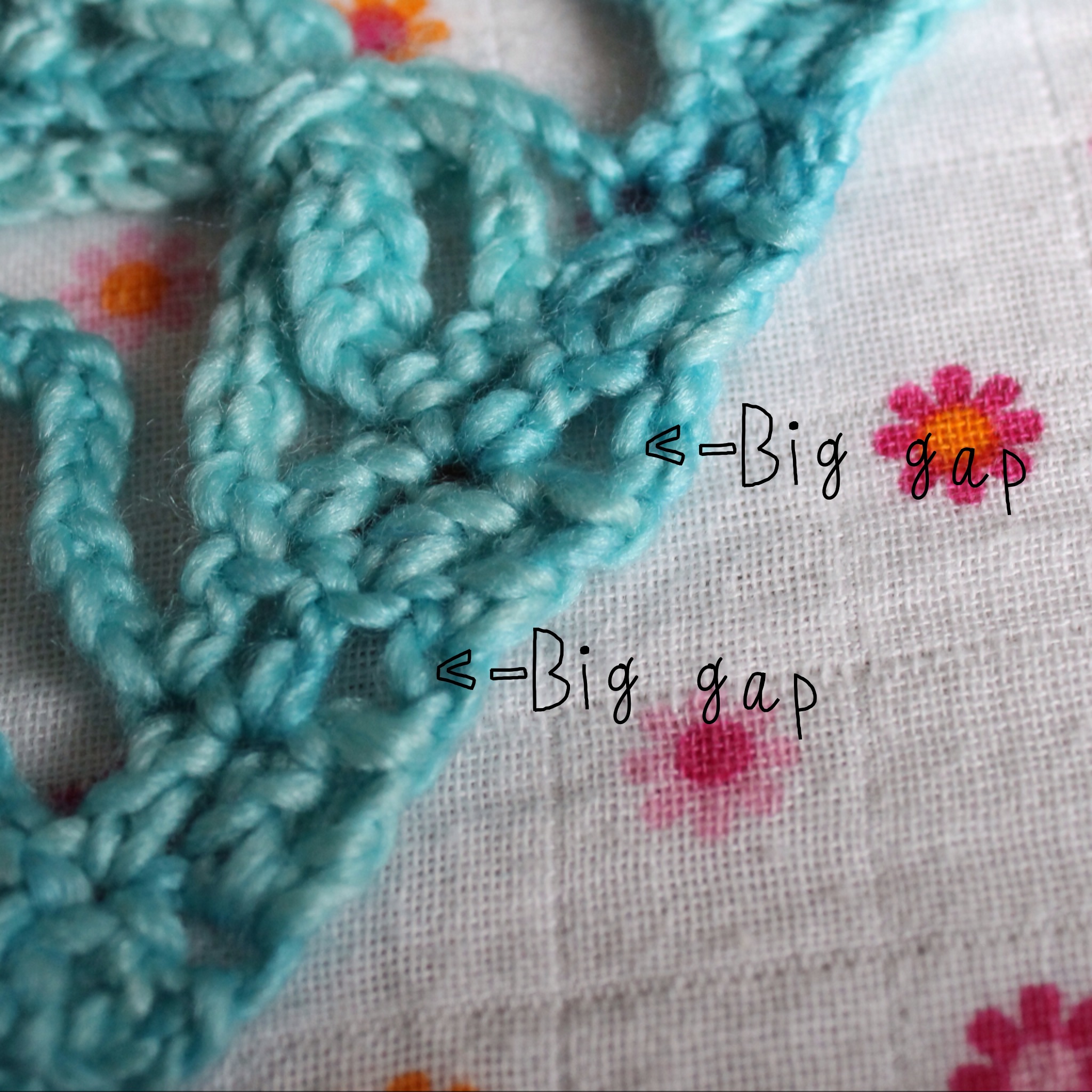
Here’s what the standard chain 2 turn begin looks like:

Big gap, using chain 2 begin to a rowAnd here’s how it looks when you use the Chainless Starting Double Crochet:

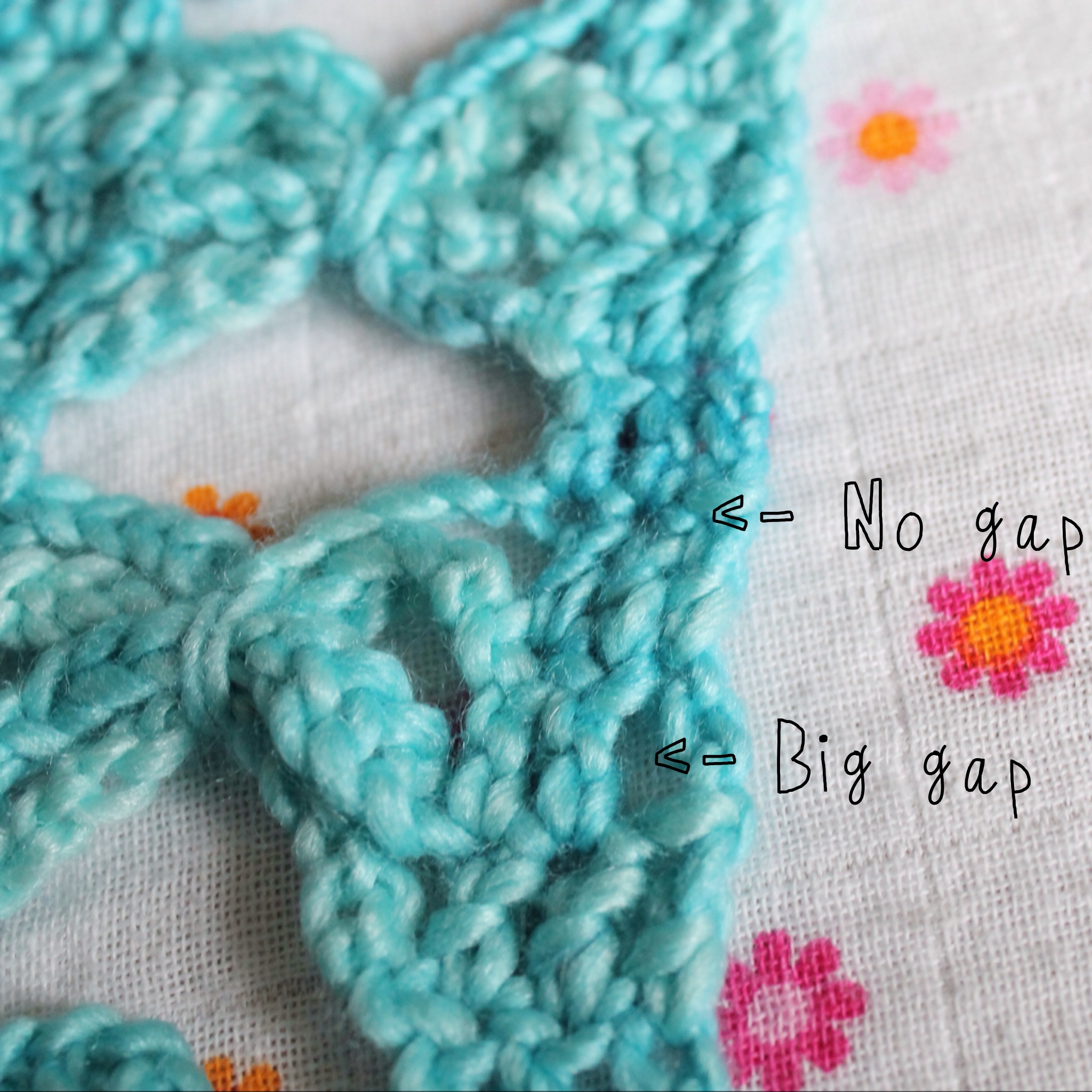
No gap, using chainless starting double crochet

And to compare:

The two methods side by side

For the instructions you can head over to Youtube and watch the tutorial made by Tamara from Moogly:

Or you can check out the photo tutorial here.  Obviously if you’re a lefty like me you have to flip everything over in your mind’s eye for it to make sense.

I love it when I come across these little hacks, so I’ll be sure to share more of them with you as I find them.

Image

Cabbage Patch Kids are the new Black

I’m calling it. Minions are over and Cabbage Patch Kids are back! Well, I don’t really believe that myself, but it seems everywhere I look I see cute babies wearing Cabbage Patch Kids hats.

Did you have one as a child? I think I was the only girl at school not to have one (I didn’t have any My Little Ponies either, poor me) and now all of a sudden I’m in an age group where it’s time to be nostalgic for all things 80s!

This last week I had two orders to make these Cabbage Patch Kids hats, and I found a great free pattern from the Dearest Debi site. The pattern is for a newborn, but it is extremely easy to up-size it to whatever you need.

Here are the results of my endeavours:

Cabbage Patch Kid hat on missneriss.com.  Based on a FREE pattern by Dearest Debi.

What do you think about this new craze to be rocking the crochet world? I’ve never been a fan of Cabbage Patch Kids. I prefer the Garbage Gang/pail Kids instead. But everything comes back into fashion, so best to just embrace it!